


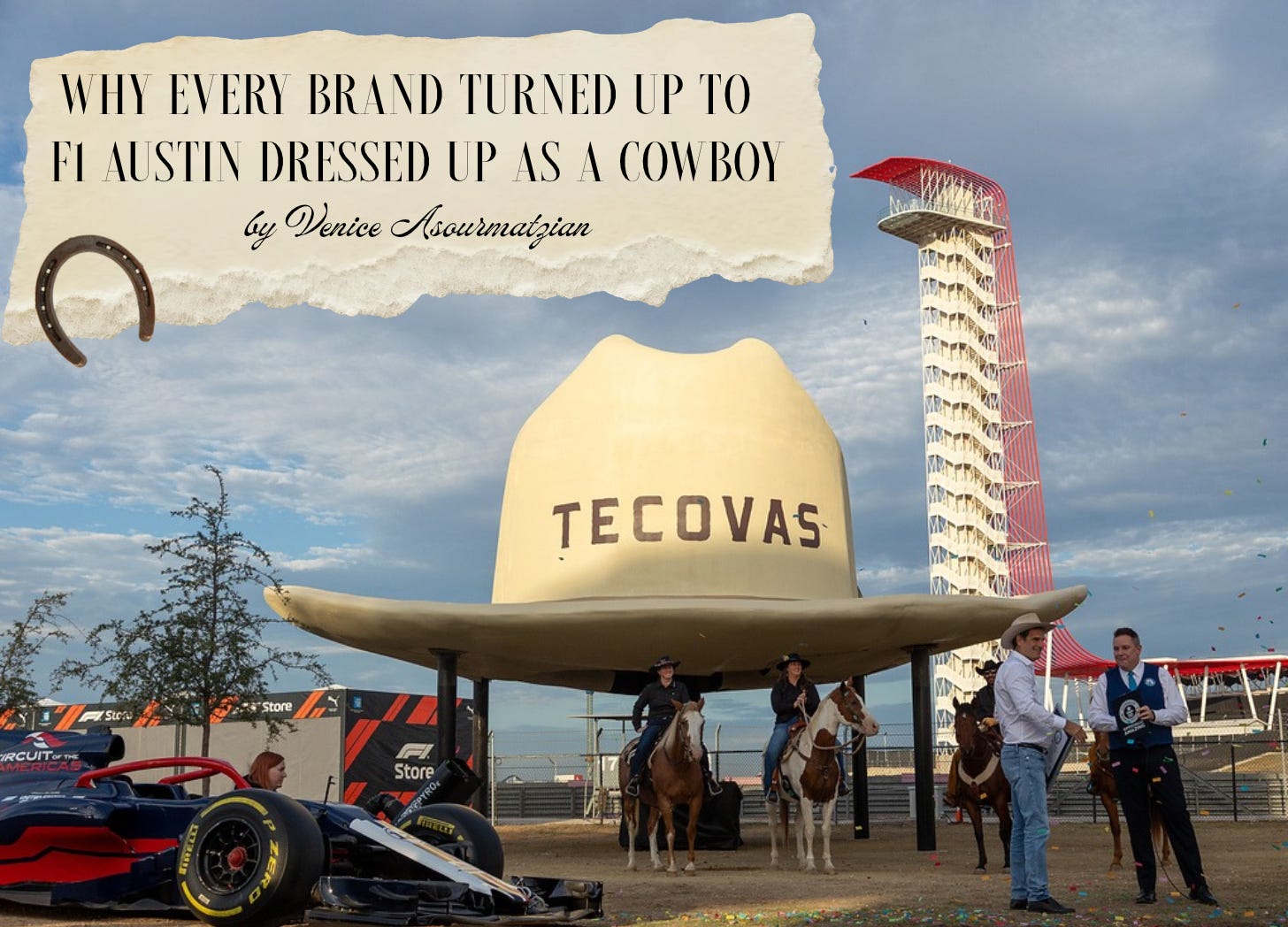
If you follow F1, you’ll know Kimi Antonelli became the youngest world champion in the sport’s history in Mexico City on Sunday, at 20 years old, and the first Italian champion since 1953. A week earlier, he won the Grand Prix in Austin, and I was there. It was my first time at a race, and the first thing I noticed wasn’t a car. It was a 47-foot cowboy hat sitting over the grandstands at the Circuit of the Americas. Then I started seeing Western everywhere: Max Verstappen’s Red Bull lion was wearing a Stetson, and Cadillac had stitched cowboy boots down the side of its car.
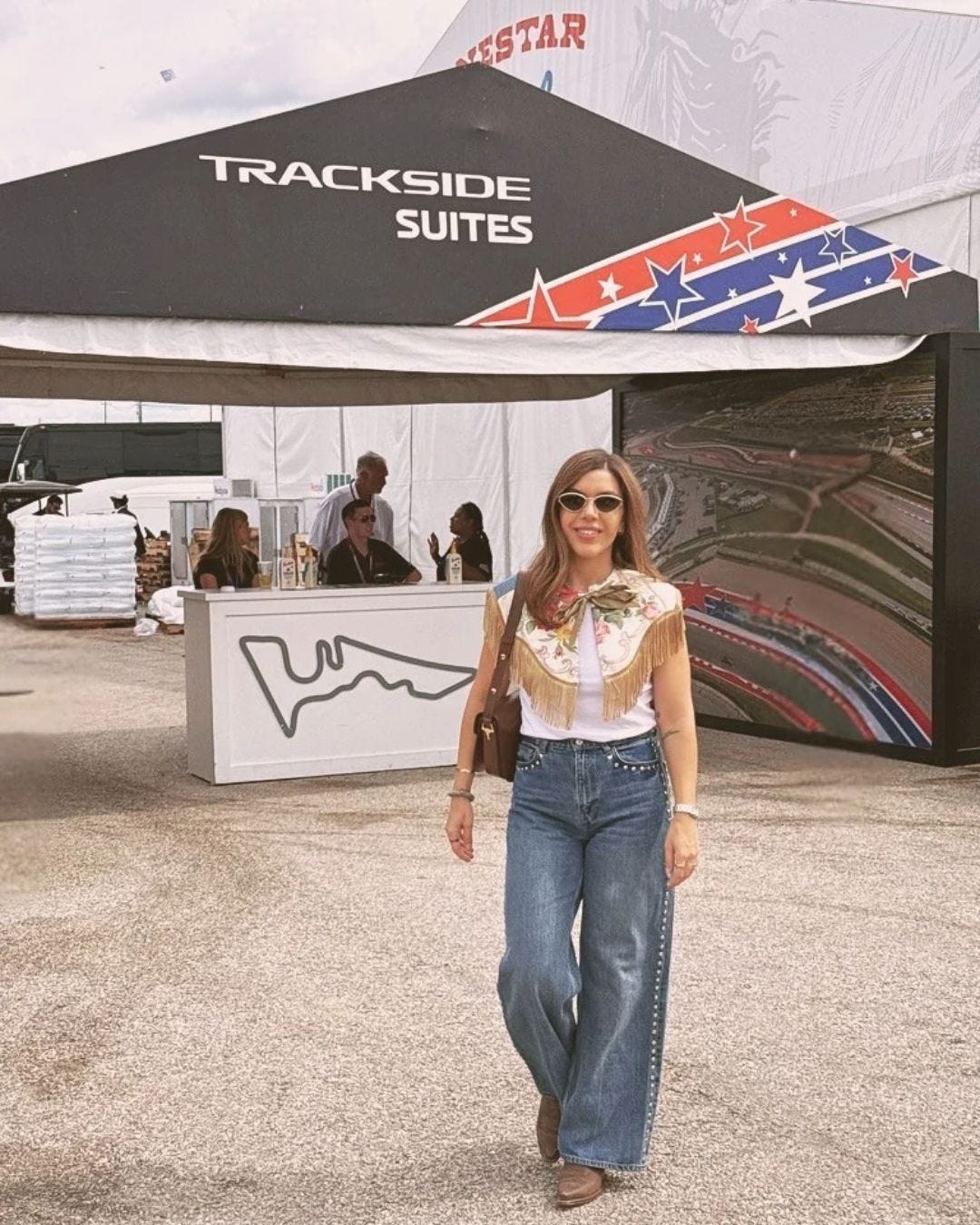
In fairness, I’d had the same idea. I’d packed a fringed capelet from the coolest shop in town aka Lauren Owen of Texas and my Tecovas boots, on the reasoning that Formula 1 in Texas probably called for a bit of Texas, and it turned out every brand at the track had come to the same conclusion, most of them with a bigger budget than mine.
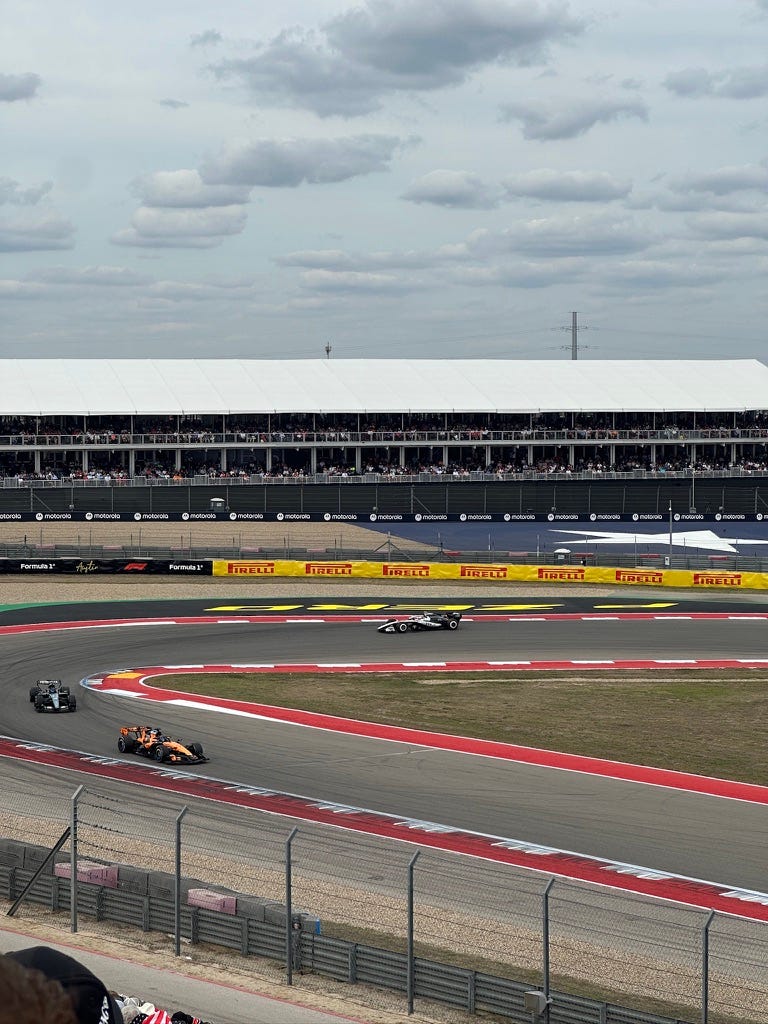
It was a good race too, with Antonelli winning comfortably, and a record weekend for COTA, with 467,000 people through the gates over four days.
Still, I spent most of the weekend with one question going round my head: why had everyone dressed up as a cowboy?
Everyone went Western, but only one brand owned it
Once I started looking, the costume was everywhere. Mercedes gave its drivers custom MANUFAKTUR cowboy boots, and Pacsun brought back the F1 cowboy hat that sold out within hours last year. F1 itself joined in, turning Sagebrush, a seventy-year-old honky-tonk on South Congress, into its own bar for three nights of two-stepping with Jack Whitehall, while Aston Martin and the Pink Paddock Club hosted “Champagne Cowgirls” on Rainey Street. It was all great fun, but when everyone wears the same costume to a party, you start to notice who looks comfortable in it.
That was Tecovas. The Austin boot brand spent four years working with COTA on what Guinness has now certified as the world’s largest cowboy hat: a 47-foot fibreglass copy of its own Cattleman hat, with a working bar underneath, staying at the track for good. Bobby Epstein, COTA’s chairman, originally just wanted something nicer than a tent for shade, which might be my favourite origin story of the weekend. Tecovas added “Haturday”, with 10% off in its Austin stores if you showed your race ticket, plus an appearance from its ambassador Valtteri Bottas, while WNBA star Sophie Cunningham posted from the weekend in full Tecovas. The difference was that the other brands were borrowing a look for the weekend, while Western is simply what Tecovas sells all year round. The hat is staying at the track for good, too, so every Grand Prix in Austin from now on will start under a Tecovas hat.
Who are F1’s new fans? Women, Gen Z and fans recruited by friends
The cowboy hats make more sense once you look at who is now in the grandstands. According to F1’s 2025 global fan survey, the US has become the sport’s biggest single market, and the new arrivals look nothing like the old stereotype of a middle-aged man in a team cap. Women make up a quarter of fans and three in four new fans, and in the US almost half of newer fans are aged 18 to 24. Most of them didn’t arrive through Drive to Survive, whose influence has faded every year since 2022. They arrived through friends and family, which is exactly my story: my partner introduced me to the sport and then dragged me, I mean accompanied me, to the race.
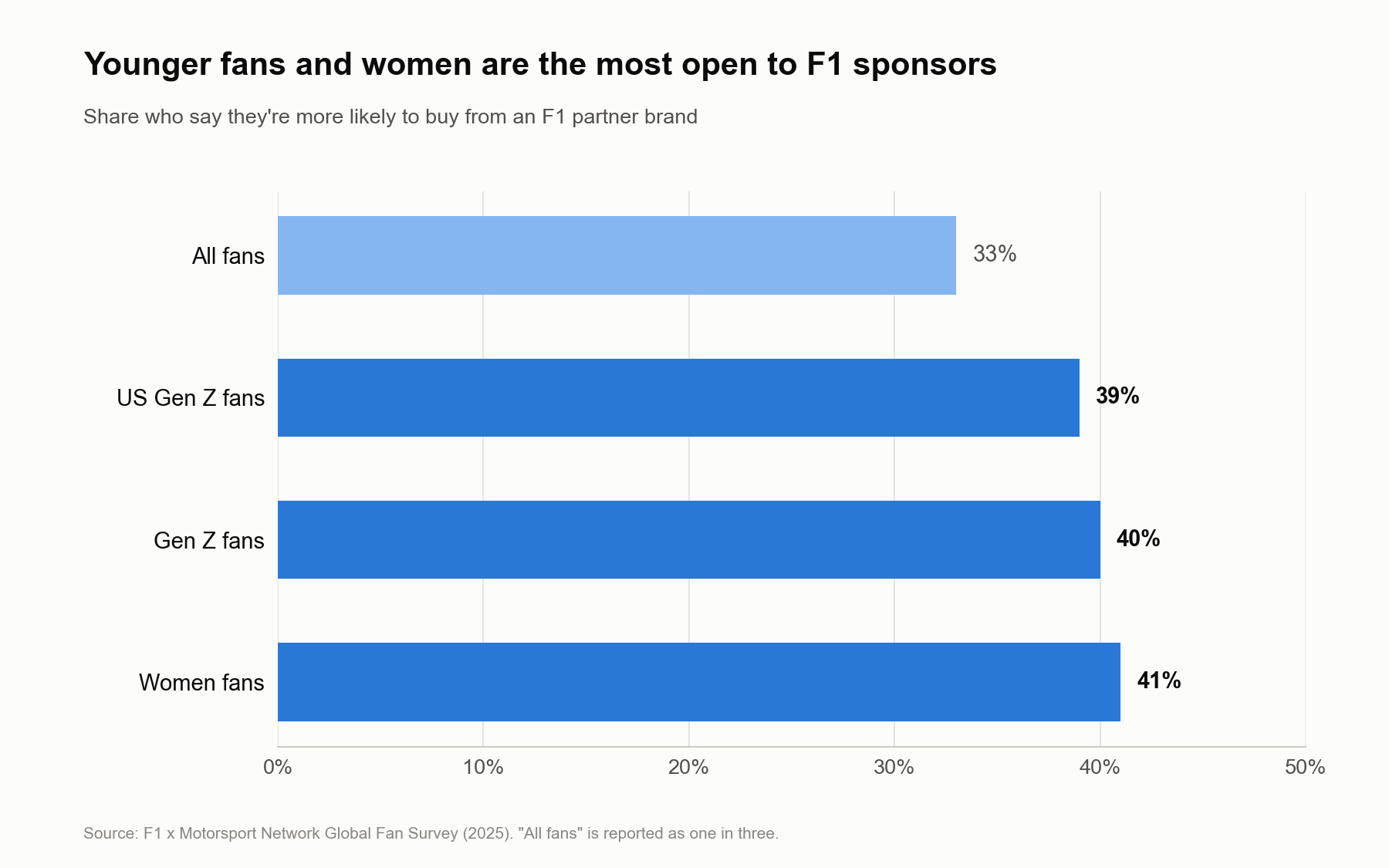
For this audience, being a fan is as much about what you wear and post as what you watch. Fifty-nine per cent of newer fans say fashion and style are part of their fandom, and 70% of Gen Z fans say they like F1’s status and image. So the brands weren’t really dressing for the race. They were dressing for the photo, because the photo is how the next fan gets recruited.
Beauty brands understood this better than anyone, and two of them showed up with completely different playbooks. Sephora went the official route as F1 Academy’s beauty partner, with its own car on the grid driven by Natalia Granada, Glam Bars for Paddock Club guests, and creators flown in to post from the paddock under #SephoraPartner. Then Granada put the Sephora car on the podium in P3, about as good a payoff as a sponsor can hope for. POV Beauty didn’t pay F1 anything. It opened a neon K-beauty arcade on South Congress, brought in co-founder Mikayla Nogueira for a meet-and-greet, and let the race-week crowds come to it in its second-biggest market. The fun twist is that POV’s new $24 lip marker reached Sephora’s shelves five days later, so one brand paid to be inside F1, the other set up outside it, and both ended up selling through the same shop. It’s also telling that Sephora and LEGO both chose to back the women’s series rather than an F1 team. With 42% of female fans already following F1 Academy, at a fraction of the cost, I think it’s the smartest money on the grid.
The best F1 pop-ups in Austin: Lando Norris, Red Bull, Mercedes and Enchanté
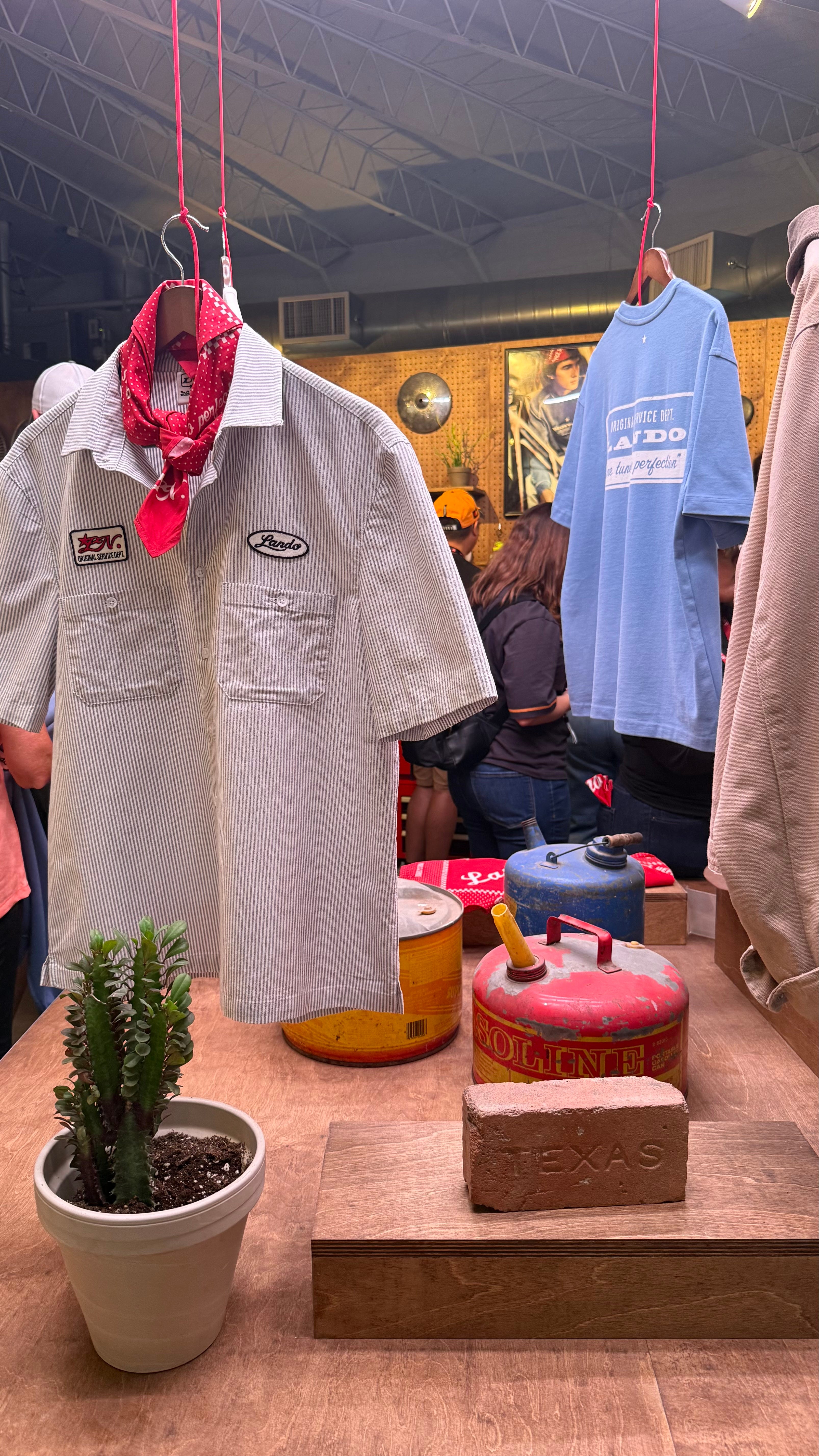
My favourite pop-up of the weekend was Lando’s. Lando Norris turned an old petrol station on San Jacinto into “Lando’s Original Service Dept.”, a 1970s garage selling his LN4 workwear, and the attention to detail was a joy: vintage oil cans, a brick stamped “TEXAS”, and striped mechanic shirts hanging from the ceiling as if they’d just come off a shift. McLaren’s sponsor Google Gemini helped fans design their own patches, a far more memorable way for an AI tool to show up than another logo on a wall. The clothes were genuinely well designed, though the jacket I had my eye on was close to $400, which turned a spontaneous purchase into a “let me think about it”. No wonder drivers are building their own brands: 40% of American fans follow a driver before a team, and they’ll follow him to a clothing line too.
If Lando’s won on design, Red Bull’s Austin Race Nights won on atmosphere, with DJs, food, simulators and a pit-stop challenge where friends and couples raced each other to change a tyre. It looked like an excellent way to find out who in a relationship crumbles under pressure. The queues were long enough that neither my partner nor I took part, and for the sake of domestic harmony I’m counting that as a win. Sometimes a pop-up’s job is simply to make people link your logo with a very good night.
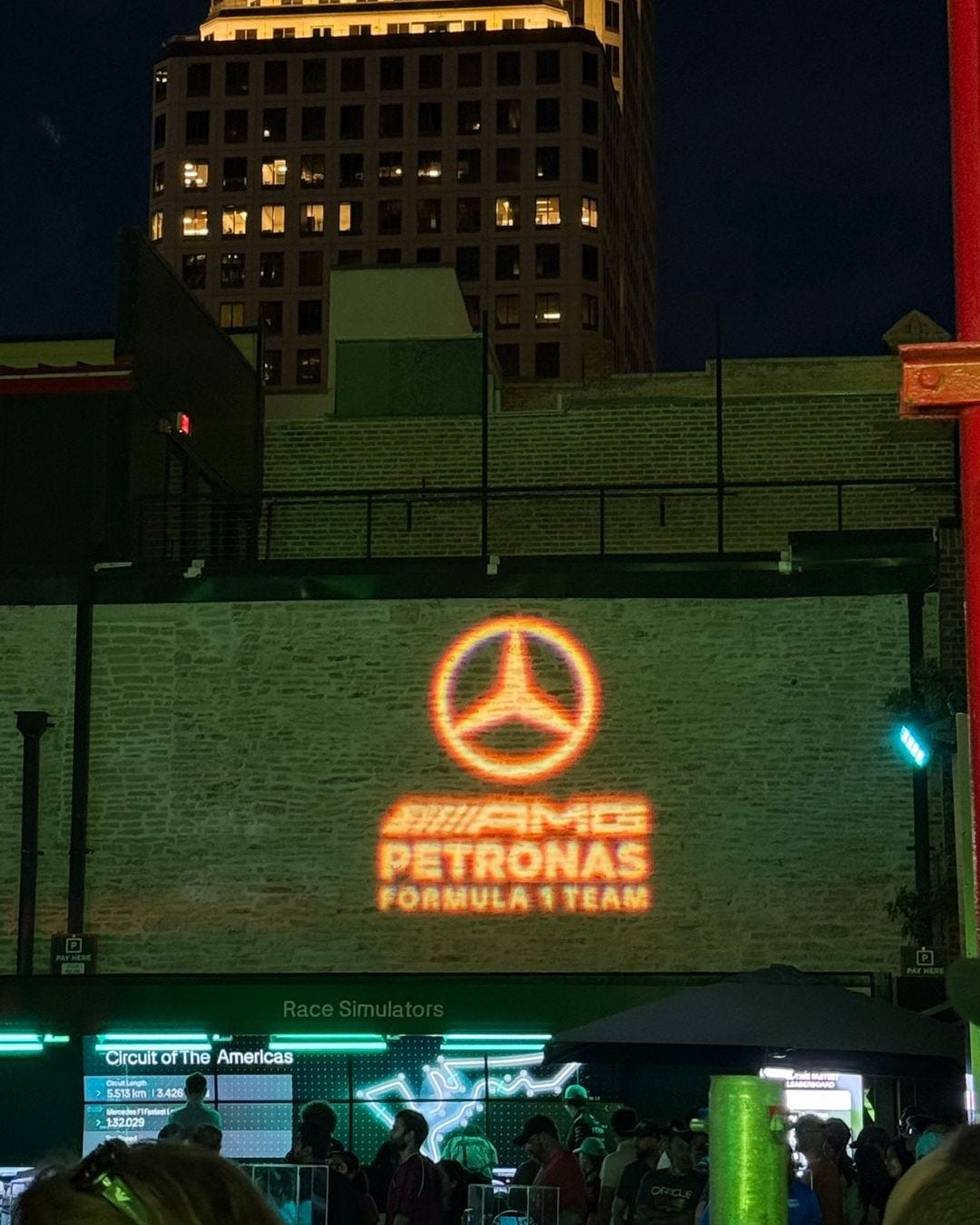
The biggest lesson came from comparing two evenings. At the Mercedes Fan Hub on Congress Avenue, we happened to arrive just as Antonelli was attempting the same pit-stop challenge, changing tyres as fast as he could while the crowd packed in around the screens, two days before he won the race. Nobody wanted to leave.
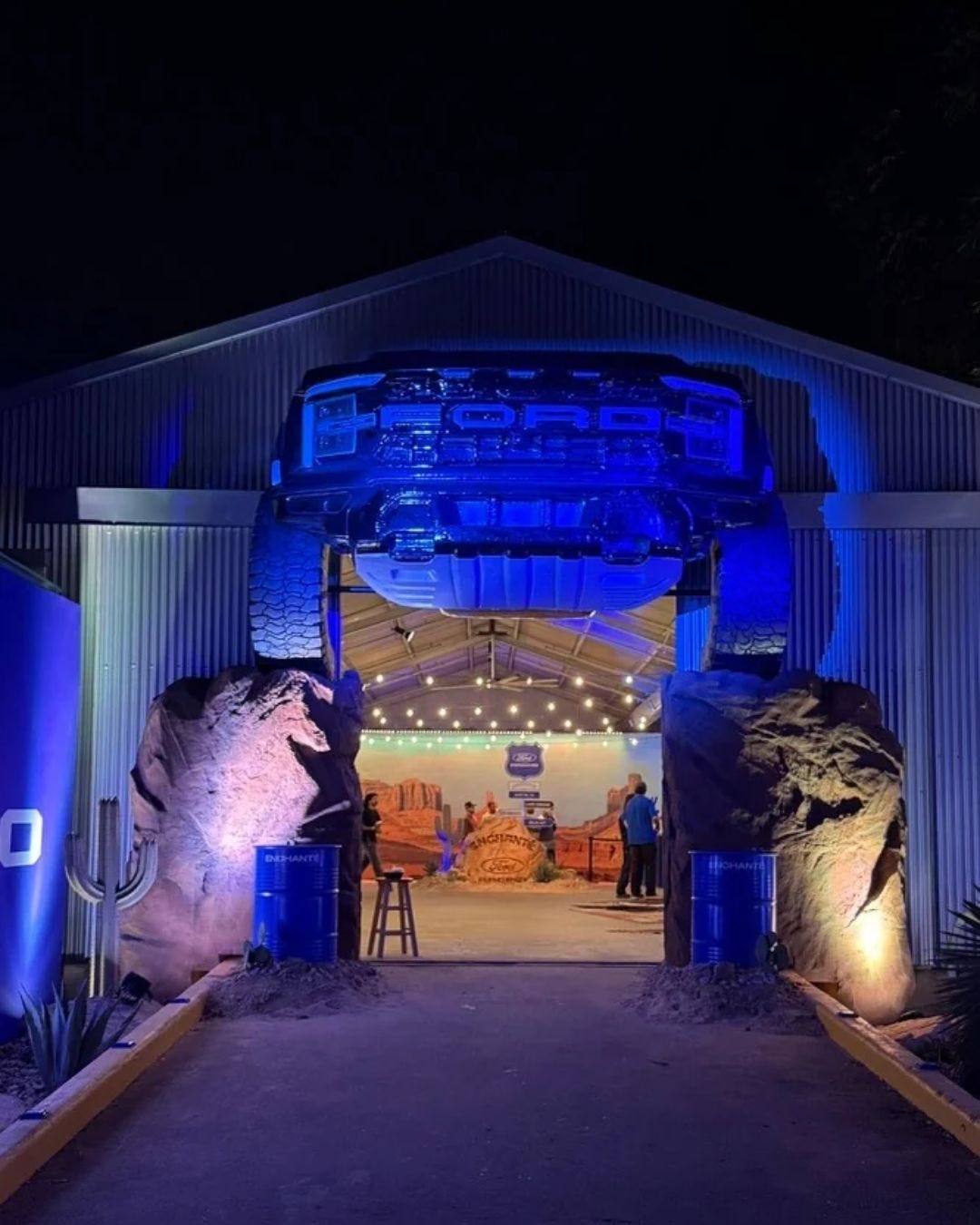
Daniel Ricciardo’s Enchanté x Ford pop-up had some of the best set design of the week: a Ford Raptor mounted above the entrance on two giant rocks, and a desert signpost pointing to the stops on his road trip. But when I went on Thursday evening it was a bit dead. The very next night, Ricciardo turned up and played harmonica on stage with singer-songwriter Rob Baird, on a song they’d written together on his road trip to Austin, so I can only blame my timing. Beautiful branding can only do so much; what fills the room is the driver.
The least glamorous brand of the weekend may have been the most useful. Amex gave card members a free race radio to follow the commentary across a circuit where whole stretches have no screens, and a handheld fan that was a lifesaver in the Texas heat. It won’t make anyone’s feed, but I remembered it kindly on the drive home.
What marketers can learn from F1 Austin
So why did every brand turn up dressed as a cowboy? Partly because it’s Austin, and a costume is the quickest way to say you belong. Mostly, though, because F1’s new fans came for something to wear, photograph and tell their friends about, and the brands that did best gave them exactly that. Tecovas gave them the biggest hat in the world to stand under, Lando gave them a patch to stitch on, and Sephora gave them a podium to cheer. As it turns out, telling friends is how most of them got here in the first place, which means the next lot of fans are probably scrolling through those photos right now.
I just sent to my (female) BFF who loves F1!