


It’s been a while since I last wrote here. Life happened, mostly in the form of moving across the Atlantic to Austin, Texas, and the unglamorous admin avalanche that comes with it: paperwork, visas, moving boxes, and tasks that should take fifteen minutes but somehow eat an afternoon. I’ll write a separate essay on relocating in your mid-thirties at some point, since I know a lot of people are curious about it and terrified of it in equal measure.
This past weekend had everyone, myself included, glued to big screens. Between the World Cup and The Odyssey, Christopher Nolan’s latest film, it was hard to say which had the world more transfixed: men battling over a ball, or men battling Cyclopes and sirens. That tension between spectacle and substance stayed with me long after the credits rolled, and I watched it as three people at once: a cinephile, a marketer, and a Greek who has had Homer’s book on her desk since she was twelve. Each of those three had something different to say. The cinephile wants to talk about the craft. The marketer wants to talk about the campaign that turned scarcity into the story. And the Greek in me can’t stop thinking about a discourse cycle that argued loudly about casting while staying almost entirely silent about the culture the story actually belongs to.
In this piece:
I. The Craft Is Not in Question
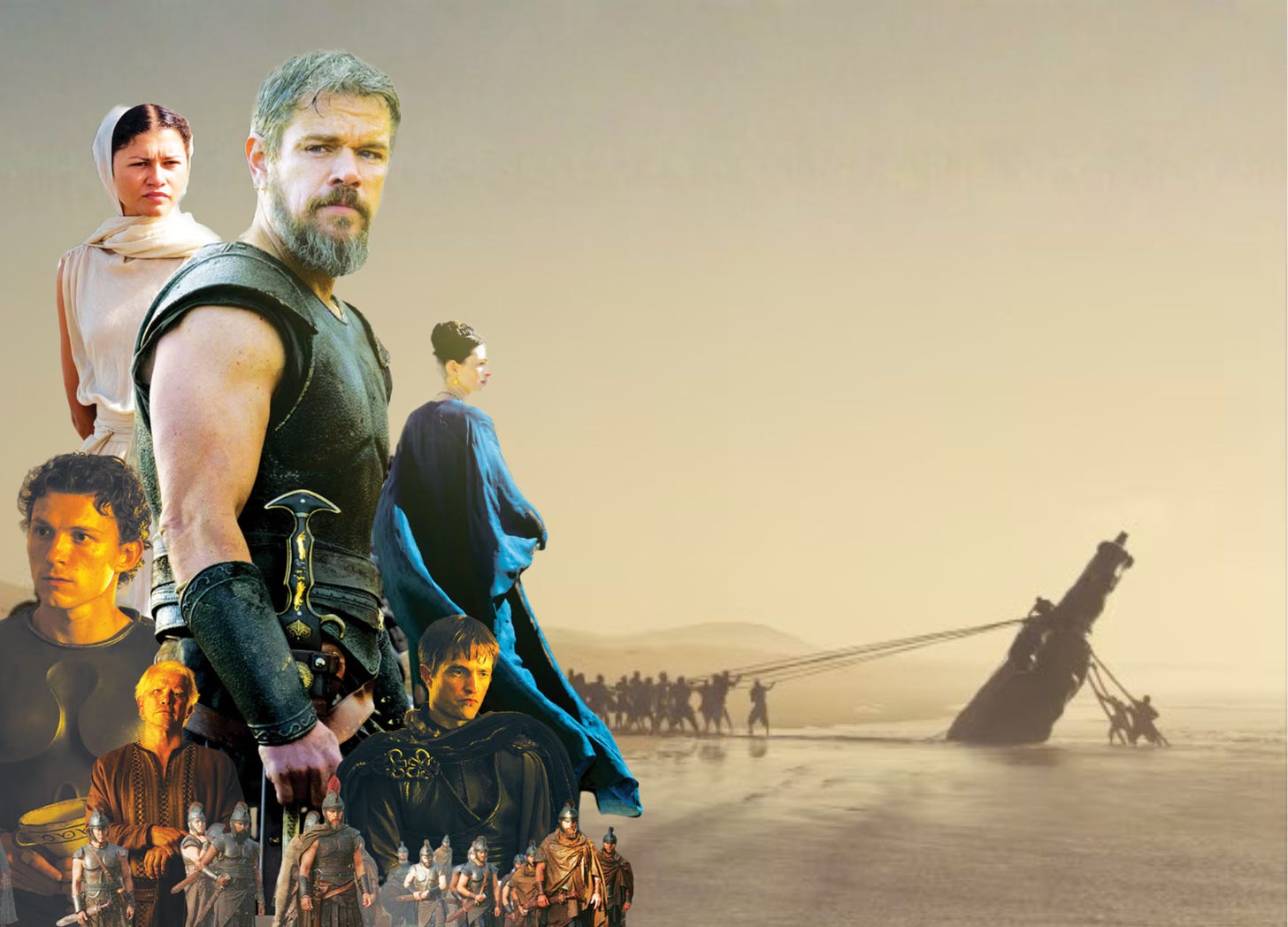
Austin, it turns out, is not a city where you can walk up and buy an IMAX ticket on a whim. I learned that the hard way, so I watched the film at a “normal” Regal cinema. The Odyssey was shot entirely on IMAX 15-perf 70mm film using the new IMAX Keighley camera system, with no digital intermediate involved. The prints in theatres are struck directly from the original negatives, and the result is roughly 14K to 16K of resolution per color channel, on film stock nearly nine times the size of standard 35mm.
Only a handful of theatres on the planet, around 45, can actually project it the way Nolan intended. In his 60 Minutes interview with Scott Pelley, Nolan showed the splicing process: his team physically cutting and gluing the film together at one of the last labs in the world still equipped to do it. For scale, a single 70mm IMAX reel runs 11 miles and weighs 530 pounds.
What struck me most, though, wasn’t the format itself. It was the restraint and the dedication to the craft behind it. In an industry increasingly comfortable outsourcing imagination to CGI, special effects and now generative AI, Nolan built the Trojan Horse, several of them in fact, each 35 feet tall, entirely out of wood. His team buried one of them in sand and had the crew physically drag it across a beach on camera, with no digital assistance at all. In an interview with the reporter Jake Hamilton, Nolan mentioned that the Cyclops was filmed practically inside Nestor’s Cave in the Peloponnese, brought to life by Bill Irwin, the same performer behind TARS in Interstellar, using puppetry and animatronics, and working from a philosophy borrowed from Guillermo del Toro: the creature should never read as a mindless killing machine.
Anyone who has worked on even a minor social media asset or TV ad knows how much easier it is to fake craftsmanship than to actually produce it. At the scale of a film like this, where a million decisions could have quietly been handed to a render farm instead, the commitment to doing it physically becomes the whole argument. This is a film that wants you to know what things cost, not just in money, but in labor. That isn’t incidental to the marketing. It is the marketing.
II. Scarcity as Marketing Strategy
Universal’s campaign for this film deserves to be studied on its own, separate from the film itself. The strategy was scarcity, applied with real discipline.
According to Forbes, the first teaser played exclusively in theatres ahead of Jurassic World Rebirth in July 2025 and was never posted online, circulating only as shaky leaked clips that kept getting taken down. A six-minute prologue screened only ahead of 70mm rereleases of other films that December, with London’s BFI IMAX audience not even told it was coming in advance. By the time a conventional trailer arrived online, Universal had already trained its most engaged fans to treat a specific theatre format as the only way to see new footage first. It worked. The countdown trailer pulled 121.4 million views in 24 hours when it finally went wide, making it the studio’s biggest trailer launch on record.
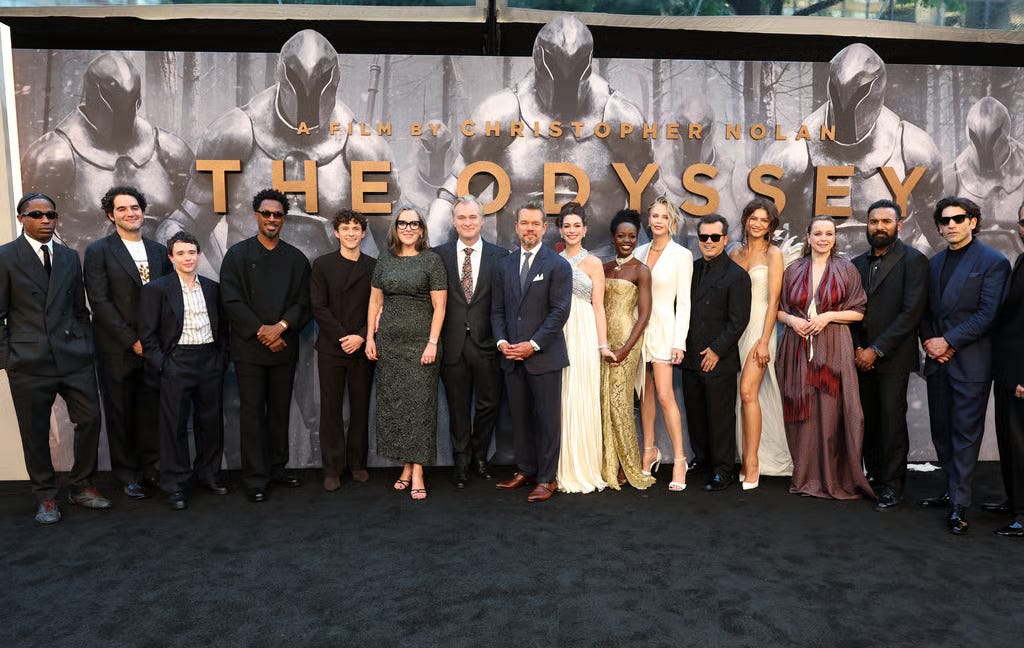
They extended the same logic to press access, skipping the now-standard influencer advance screenings entirely and showing the film only to critics, and only after the London premiere had already taken place. That’s a real gamble in an era where influencer reaction clips function as a film’s unofficial second trailer, but it protected the film from premature, take-heavy discourse before anyone outside a controlled room had actually seen it, and it reinforced a single message: this is meant to be experienced cold, on a big screen, once.
IMAX 70mm tickets went on sale a full year before release and sold out overnight in markets like Melbourne and London. Universal locked in a three-week exclusive IMAX window and a minimum five-week theatrical window before any home release, a real departure from the roughly three-week windows that became common during the pandemic. On a $250 million production budget and roughly $125 million in marketing spend, the film opened to an estimated $124 million domestically over three days and closed out its first week at $199.3 million across 3,919 theatres, holding strong rather than dropping off the way most wide releases do. Deadline has the second-weekend outlook between $61 million and $74 million, which would be an unusually soft decline for a film this size.
I’ll say this as someone who works in marketing: withholding is the harder strategy to execute and the easier one to get wrong. When it works, though, it works better than almost anything else available. Universal didn’t just make a scarce product. They made scarcity the story, and let the audience do the promotional work for them.
III. The Discourse Was, Frankly, a Lot of Noise
Once the film was actually in theatres, the internet did what the internet does. It turned a genuine cultural event into a week of chatter, some of it fair, most of it not.
There was real, useful conversation, with people appreciating the cost, the craft, and the sacrifice behind an IMAX 70mm release. There was also a less useful strand: accusations that limiting the “true” experience to around 40 theatres worldwide was, in effect, sorting audiences by wealth, even though the price gap between an IMAX 70mm ticket and a standard screening isn’t actually that large. The memes about poor people seeing less were funny, and they weren’t entirely wrong either, since access is access. But they flattened a genuinely interesting scarcity strategy into a class narrative that the price data doesn’t fully support.
Then there was the fan behavior, which was its own kind of spectacle: 3 a.m. screenings, Reddit threads litigating the difference between IMAX formats so intensely that some people talked themselves out of going at all, and fans openly admitting they were sacrificing sleep and work the next day just to see it the way Nolan intended. Universal even built an online tool letting people compare aspect ratios across formats before choosing a theatre, a smart, almost customer-service-minded piece of the campaign that deserves more credit than it got. And yes, there was a $70 Trojan Horse popcorn bucket, which is a genuinely inspired merchandising idea let down by questionable industrial design. Why open the belly of the horse like a drawer, and why make that opening so small? And take my advice: don’t bring it home.
But the loudest strand of the discourse, and the one I find closest to genuine nonsense, was the casting backlash. The final trailer picked up roughly 654,000 dislikes at the time of writing, tied to the casting of Lupita Nyong’o as Helen of Troy and Elliot Page as Sinon, with Elon Musk repeatedly weighing in to accuse Nolan of bias and promising to create an entirely AI-generated, “historically accurate,” adaptation of The Odyssey. Universal, to its credit, didn’t take the bait.

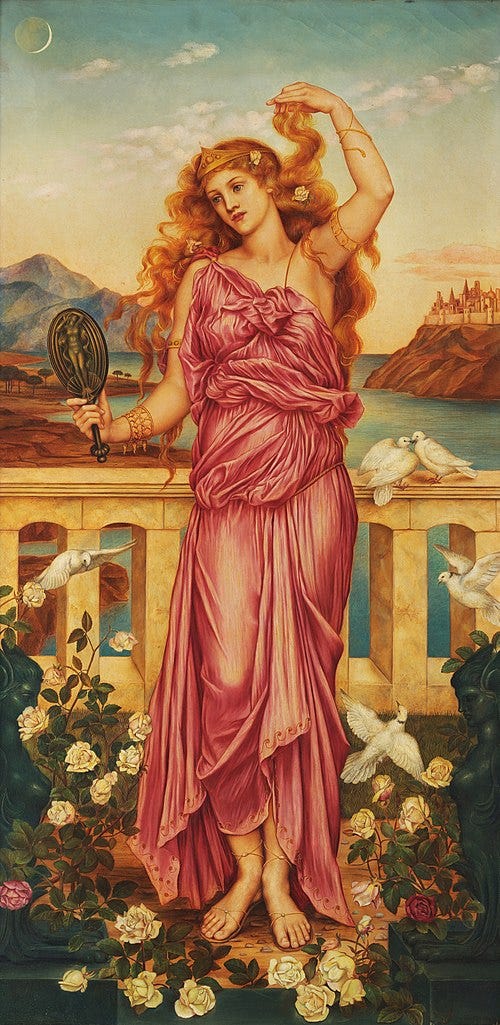
Here's my issue with that entire conversation: it's arguing about the wrong thing. The Odyssey is a nearly 3,000-year-old oral epic with no single authoritative "true" version, full of mythical creatures and gods, an ancient fictional manuscript rather than a historical record with fixed facts to get right or wrong. Even Homer barely describes Helen physically.
According to Arxeion Politismou's breakdown of the text, Homer describes Helen's otherworldly beauty using just four epithets: kallikomos (lovely-haired), kalliparios (fair-cheeked), leukolenos (white-armed), and tanypeplos (long-robed). There is no eye color, no facial description, and no hair color mentioned, and he deliberately leaves the most beautiful woman in antiquity to the audience's imagination. A director has always had latitude here, because the text itself refuses to pin her down. Spending a week arguing about actors' identities instead of what the film actually does with the material is, to me, a waste of a genuinely interesting cultural moment.
IV. Greek Voices Not Heard
And that brings me to the point I actually care about most.
I was twelve when I first studied The Odyssey in a Greek classroom, the age when most Greek children start learning it, not just as a story, but as a way to understand struggle, endurance, and what it costs to find your way home. What we ultimately carry from this story is the question of what it means to be restless, to be immortal in reputation but never at peace.
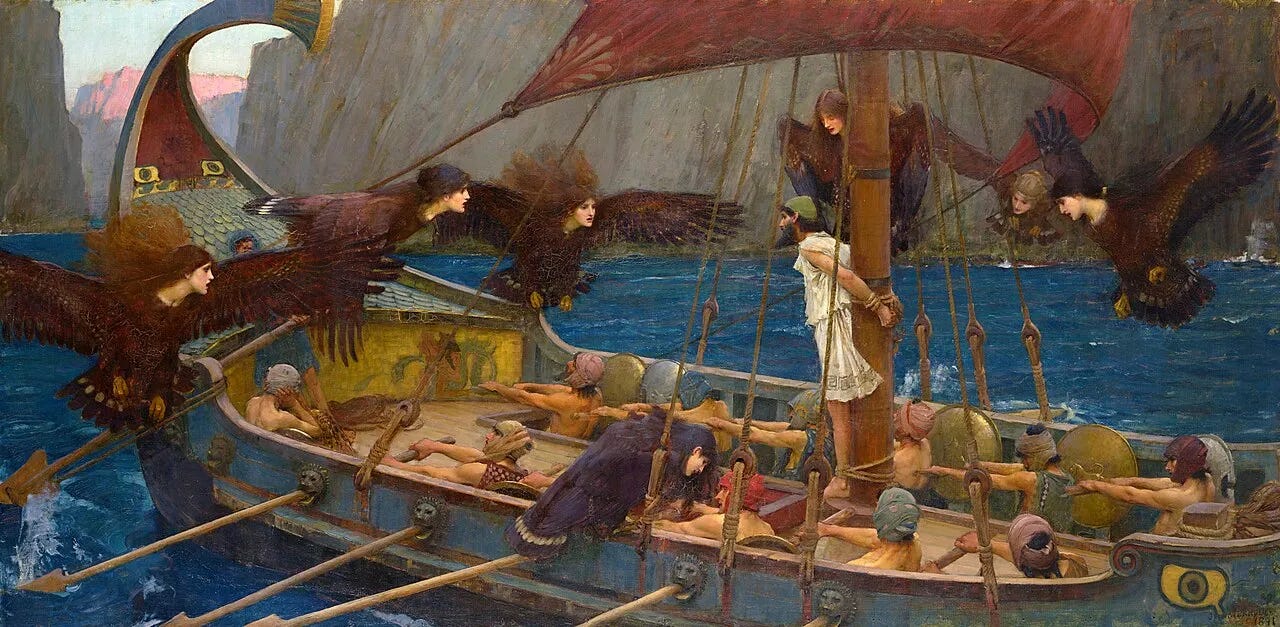
The sirens read today as the pull of easy temptation, and the years Odysseus spends on Calypso's island work as an allegory for the oldest human struggle there is: the comfort of staying versus the harder, often painful calling of duty, mortality, and purpose. That's the part that stays with you long after the exam is over, and it's also why the language sticks. If someone is caught between two impossible choices, we say they're navigating between Scylla and Charybdis. If someone is clever under pressure, we call them resourceful, like Odysseus. It's living language, not classical trivia.
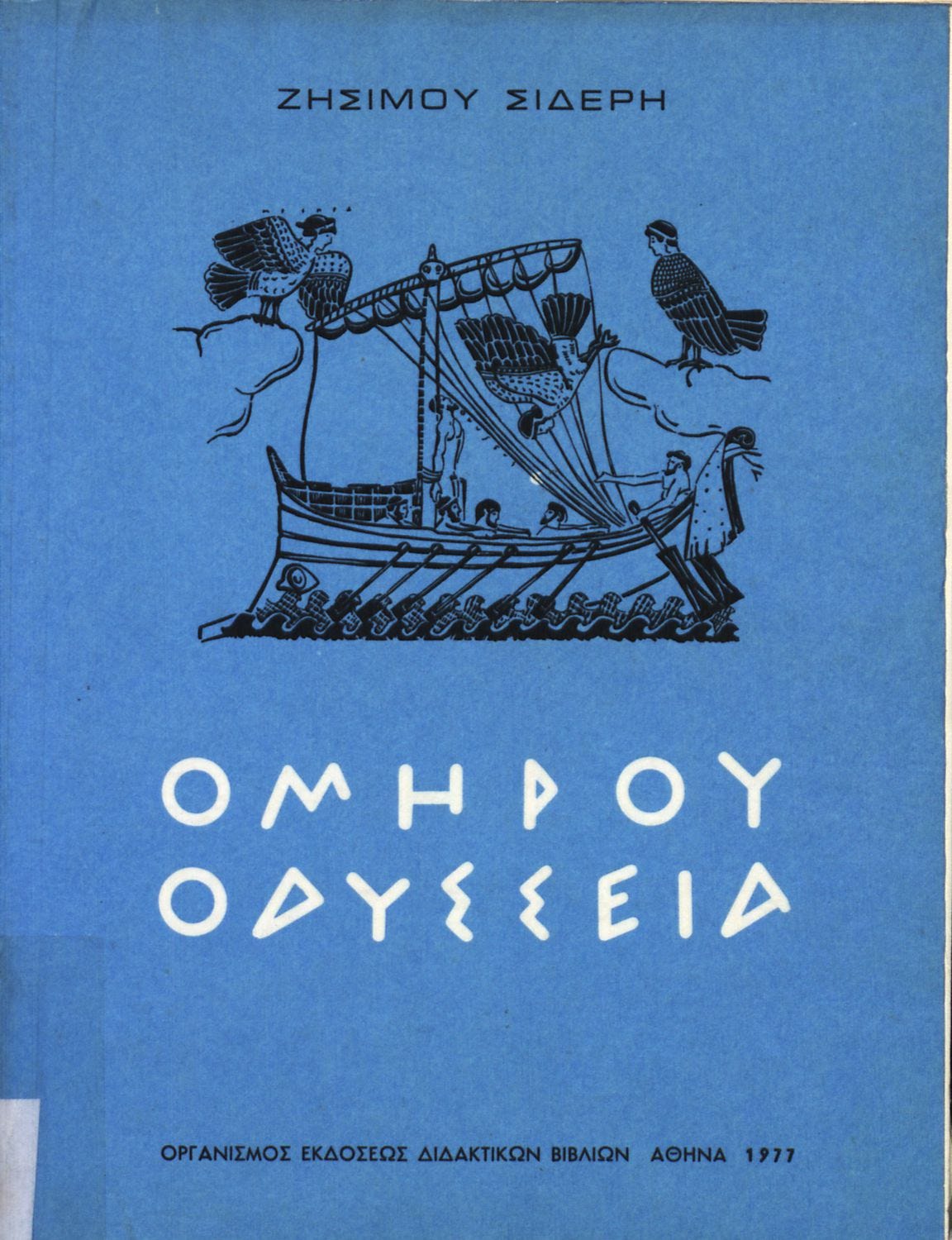
And yet I didn’t see a single Greek actor in this film. I do understand the commercial logic of an A-list, globally bankable cast. I’m not naive about what greenlights a $250 million production. But this is a film with dozens of supporting and tertiary roles, and a budget that could have made room for Greek performers in some of them. Beyond casting, there’s a deeper gap. I would have liked to see more Greek historians, classicists, and writers woven into the film’s press and cultural conversation, voices who could speak to what the text means to the culture it came from, not just what it means as source material for someone else’s adaptation.
That gap becomes harder to defend once you know this: the Greek government subsidized the production with an estimated 6 to 6.5 million euros in state funds and tax credits through the country’s national film incentive program. Greece funded part of this film and got no press tour stop in Athens, arguably the single most obvious and most symbolically resonant city to have launched a film adaptation of The Odyssey.
That’s a representation gap, and it’s the one piece of this rollout that Universal’s otherwise disciplined, thoughtful campaign didn’t seem to think about at all. I’m aware of Greece’s limited geopolitical and economic power on the world stage, but this manuscript is so woven into our country’s history that some representation would have made sense. It’s a bit like staging a Shakespeare play with not a single British voice involved anywhere in the process. That would strike most people as strange. I’m not going as far as to call this cultural appropriation, and I think it genuinely matters that younger audiences and people unfamiliar with Homer get to experience this story through Nolan’s craft. But it still stings to see so little clear involvement from Greek people in a story that has been ours to tell for nearly 3,000 years.
Curious where people land on the representation point, agree, overthinking it, something in between? Drop a comment.
Where I Land
The craft is real, and I don’t think it’s in dispute. This is one of the most ambitious physical productions in recent memory, and it shows in every frame. The marketing was, genuinely, some of the smartest scarcity-driven strategy I’ve seen from a major studio in years. The online discourse around casting was mostly noise, chasing the wrong argument about a text that was never that specific to begin with. But the absence of Greek voices, on screen, behind the scenes, and on the press tour, is a real gap in an otherwise excellent campaign, and it’s the one thing I’d want Universal to actually reckon with the next time they adapt a culture’s foundational text.
Well said